
How to Shovel Snow Without Hurting Your Back: A Loveland Chiropractor's Guide
Push it, don't throw it. Here is how to clear the driveway and still stand up straight on Monday.
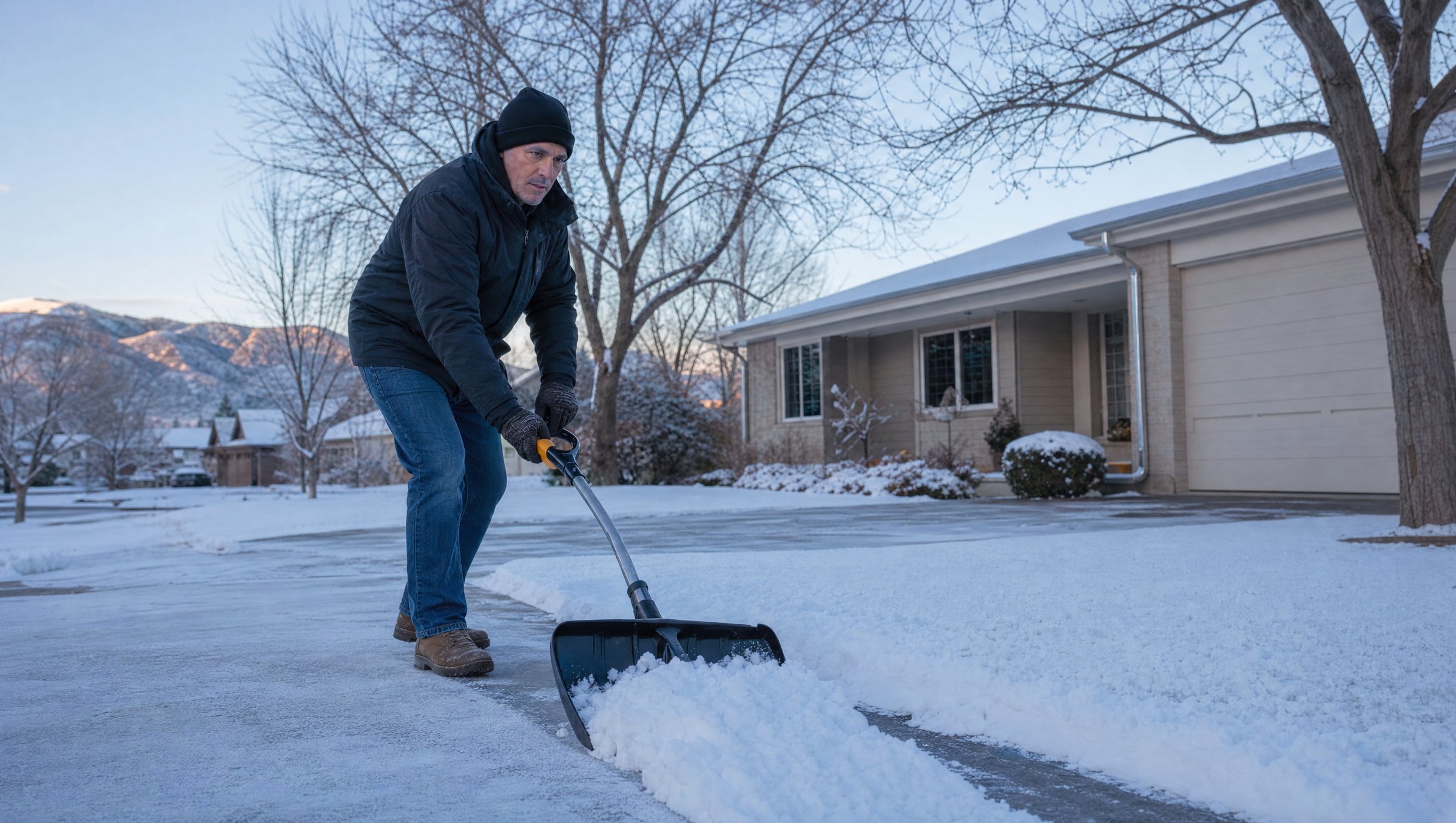
To shovel snow without hurting your back, push the snow instead of lifting it, keep each scoop small, bend at your hips and knees instead of your waist, and turn your feet instead of twisting your spine. Warm up first, take breaks, and stop if anything hurts sharply.
Here’s the deal. Shoveling is bending, lifting and twisting with weight in your hands, done over and over, in the cold, usually first thing in the morning. Each part is fine on its own. Stack them together for an hour and it’s one of the easiest ways to strain your low back all winter.
Why Colorado Snow Is Extra Tough on Your Back
Our snow can be light and fluffy one storm and wet and heavy the next, especially early and late in the season. Wet snow can weigh several times more than the powder kind. A full shovelful held out at arm’s length puts far more force on your low back than the same weight held close to your body. That’s why the “heavy snow” mornings are the ones that catch people.
7 Ways to Shovel Without Hurting Your Back
1. Push, don’t lift. Use the shovel like a plow and push the snow to the edge of the driveway. Every scoop you don’t lift is one your back doesn’t pay for.
2. Small scoops. When you do have to lift, take half a shovel. Two light lifts beat one heavy one.
3. Bend at your hips and knees. Squat a little, keep your chest up, and lift with your legs. Your back should stay fairly straight, not rounded over the shovel.
4. Turn your feet, not your back. Twisting while you throw snow over your shoulder is where most shoveling strains start. Step and turn your whole body toward where the snow is going.
5. Keep the load close. Slide your lower hand down the handle so the weight stays near your body.
6. Warm up first. Cold, stiff muscles strain easily. Five minutes of walking, arm circles and a few gentle back bends before you head out makes a real difference.
7. Break it up. Rest every 15 to 20 minutes, switch which side leads, and drink some water. On a big storm, shovel a couple of times while it’s still coming down instead of all at once at the end.
Is Your Shovel Part of the Problem?
A shovel with a curved or bent handle lets you stand more upright. A lighter, smaller blade keeps you from loading up too much at once. For long driveways, a pusher-style shovel or a snowblower saves your back a lot of lifting, though wrestling a heavy snowblower around a corner can strain a back too. Let the machine do the work.
Your Heart Matters More Than Your Back
Shoveling is real exercise, and cold air makes the heart work harder. If you have heart disease, high blood pressure, or you don’t usually exercise, talk with your medical doctor before shoveling heavy snow. If you feel chest pain or pressure, pain spreading to your arm, jaw or back, or you’re short of breath, stop and call 911. That is not a back problem.
Back Pain After Shoveling: What’s Normal?
Some muscle soreness for a day or two is normal. Gentle movement, walking and a warm shower usually help. These are signs to get it checked instead of waiting it out:
Pain that is still there or getting worse after a few days. Pain, numbness or tingling that travels into a leg. Your back “locks up” when you try to stand straight. Or this happens every winter. Get same-day medical care for weakness in a leg, or trouble controlling your bladder or bowels.
Your spine protects the nerves that run your whole body. When a shoveling strain throws the joints of your low back out of normal motion, the muscles around them tighten up to protect them. An exam shows what actually got irritated. If care makes sense, the goal is to restore normal motion so those muscles can calm down, along with simple exercises you can do at home. Our lower back pain care page explains how we approach it, and our fall yard work guide covers the same habits for raking season.
A Simple Next Step
If you’re new to our office, our New Patient Special includes a consultation with the doctor, an orthopedic and neurological exam, and a report of findings.
If the driveway already got you, call us at (970) 800-3486. Come in and let’s take a look. And next storm, push it, don’t throw it.
Related Care at Aligned and Well
- Lower Back Pain Relief in Loveland, CO
- Massage in Loveland, CO: Voted Best Place for a Massage 2026
- Corrective Exercises for Back Health in Loveland
Keep Reading
Common Questions
Questions Patients Ask Us
Should I use ice or heat for back pain after shoveling snow?
For a fresh strain in the first day or two, ice for 15 to 20 minutes at a time can calm things down. After that, gentle heat and easy movement like walking usually help more than lying still. If pain is sharp, spreads into a leg, or isn't improving after a few days, get it examined.
Is it better to push or lift snow?
Push whenever you can. Pushing snow to the edge of the driveway takes most of the lifting and twisting off your low back. When you must lift, take small scoops, bend at your hips and knees, keep the load close, and turn your feet instead of twisting.
Have a different question? Read the full list of patient questions or call us at (970) 800-3486.
Get Started
Ready to Feel Like Yourself Again?
You have put this off long enough. One thorough exam tells you what is actually going on and what it will take to fix it. Call us or send a request — we will get you in.