
Youth Football Season: What Should Loveland Parents Watch For?
Your kid is hitting other kids on purpose every Saturday. Here is how to tell ordinary Monday soreness from the complaints worth taking seriously.
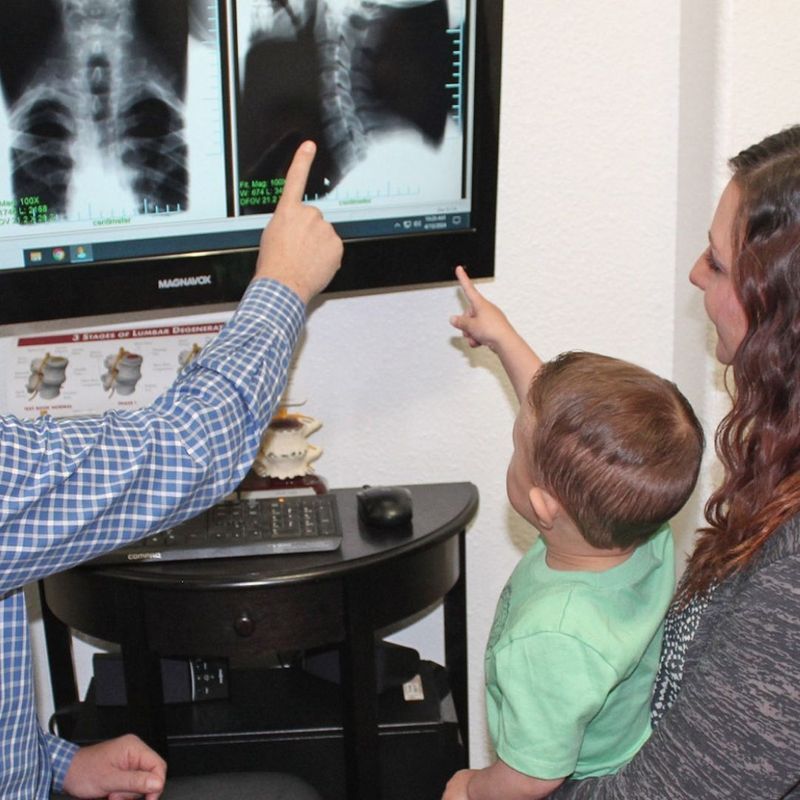
If your kid plays football, the rule is simple: any hit followed by a headache, confusion, or “not acting right” needs a medical evaluation the same day, and any neck or back complaint that is still there a week later deserves an exam. Most of the rest is ordinary Monday soreness, and this post is about telling the two apart.
By late October in Loveland the Saturday morning games start with frost on the grass and parents holding their coffee with both hands, while the kids on the field run into each other at full speed, on purpose, for fun. That is the sport. My job is not to talk anyone out of it. My job is to help you know which complaints to shrug off and which ones to take seriously.
First, the Ones That Are Not My Department
Two situations skip my office entirely. If your child takes a hit and then has a headache, seems dazed, is confused about the play or the score, is bothered by light, or just is not acting like themselves, that is a possible concussion. They come out of the game, they do not go back in that day, and they see a physician. “He shook it off” is not an evaluation.
Second, if a player has neck pain along with numbness, tingling, or weakness in both arms or both legs, or cannot move normally after a hit, do not move them. Let the trainer and emergency medical staff take over. That is a 911 situation, not a wait-and-see one.
I put these first on purpose. Everything below assumes neither of those happened.
The Stinger, or “Burner”
This is the one that scares parents most. A kid makes a tackle, then jogs off shaking one arm and says it burns or feels dead from the shoulder down. What usually happened: the head and shoulder got forced apart, or the neck got compressed toward one side, and the nerves running from the neck into that arm got stretched or pinched. The feeling typically fades within seconds to minutes.
A single stinger that fully clears is common in football. What is not normal: symptoms in both arms (see above), weakness that sticks around after the burning is gone, or the second and third stinger of the season. Repeat stingers tell me something about how that neck is handling load — its alignment, its strength, and how the kid tackles. That is worth an exam before the next one, not after.
Neck Soreness After Games
A stiff neck on Sunday is part of the deal. Helmets are heavy, collisions are constant, and a fourteen-year-old neck is still growing into the body attached to it. Soreness that improves every day and is gone in three or four days is usually just sore muscles.
Soreness that comes back every single week, a neck that will not turn fully to one side, or headaches that start at the base of the skull after practice are patterns, not bad luck. And if your kid tackles by leading with the top of the helmet, that is a conversation for the coach. Heads up, eyes up is not a slogan. It is how the neck stays out of the line of fire.
Low Back Pain in Linemen and Wrestlers
This is the one I think gets missed most. Linemen spend the whole season firing out of a low stance and driving forward with the back arched. Wrestling starts in a few weeks and brings its own version: bridging, sprawling, and being folded in half by someone who weighs exactly what you weigh. Repeated arching loads the back part of the lower spine, and in a growing kid that area can get irritated — sometimes all the way to a stress injury in the bone.
The tell is low back pain that is worse when leaning backward, better when bending forward, and has hung around more than a couple of weeks. Kids hide it because they do not want to lose their spot. A teenager’s lingering back pain is not the same thing as your back pain after raking. It deserves a proper exam, and sometimes imaging, instead of being pushed through for an entire season.
Shoulders, Hips and Everything Else
Bruises, jammed fingers, and sore shoulders fill out a normal football week. Watch for the ones that change how your kid moves: favoring an arm, a limp that lasts more than a day or two, or pain that wakes them up at night. Pain that changes movement is information. Pain that fades by Wednesday is usually just football.
What I Actually Tell Parents
Ask specific questions. “How do you feel?” gets you “fine” and a closed bedroom door. “Does anything hurt when you turn your head or lean back?” gets you real answers.
Sleep and food count as equipment. A growing kid practicing five days a week needs both. Tired kids tackle with sloppier form, and form is a big part of what protects the neck.
Make reporting pain normal. Tell your athlete that speaking up is not quitting. The kid who says “my back hurts” in September has a much better shot at still being on the field in November than the kid who keeps it a secret.
When a Check Makes Sense
If a neck or back complaint is still there a week later, if the stingers keep coming, or if your kid is quietly changing how they move, that is when I would want to take a look. A thorough exam tells us whether this is ordinary wear and tear from a contact sport or something in the spine that needs attention, and I will tell you plainly if it is just football. Our pediatric chiropractic care is built around growing spines, and parents stay in the room the whole time.
If you want a starting point, the new patient exam is how we find out what is going on. Enjoy the season, and bring a blanket for October.
Related Care at Aligned and Well
- Sports Chiropractor in Loveland, CO
- Pediatric Chiropractor in Loveland, CO
- Neck Pain Chiropractor in Loveland, CO
Keep Reading
Common Questions
Questions Patients Ask Us
What is a stinger in football?
A stinger, or burner, is a sudden burning or dead-arm feeling down one arm after a hit, caused by the nerves running from the neck into that arm being stretched or compressed. It usually fades within minutes. Symptoms in both arms, lingering weakness, or repeated stingers should be examined before returning to play.
When should a young athlete’s back pain be checked?
Back pain that lasts more than a couple of weeks, is worse when leaning backward, or changes how your child moves should be examined. Repeated arching in football linemen and wrestlers can irritate the growing lower spine, and an examination is how you find out what is going on.
Have a different question? Read the full list of patient questions or call us at (970) 800-3486.
Get Started
Ready to Feel Like Yourself Again?
You have put this off long enough. One thorough exam tells you what is actually going on and what it will take to fix it. Call us or send a request — we will get you in.